

How to Become an Affiliate Marketer: Complete Career Development Guide

Learning how to become an affiliate marketer goes far beyond joining programs or posting links. It’s about understanding the business model, developing specialized affiliate marketing skills, and treating affiliate marketing as a career built on consistency and professionalism.
This guide teaches you how to become an affiliate marketer strategically — combining entrepreneurship, content creation, and analytics to build a profitable, long-term business.
Affiliate marketing as a career has evolved from a side hustle into a global profession. Those who approach it as a structured career path often build sustainable digital businesses that generate income for years. Today, learning how to become an affiliate marketer is comparable to learning any other digital profession — it requires time, dedication, and strategic education.
Understanding the Affiliate Marketing Career Landscape
The affiliate marketing industry has grown into a $17 billion global market, creating real career opportunities for those who want to become an affiliate marketer and work independently from anywhere in the world.
Affiliate marketing as a career offers location freedom, flexibility, and limitless earning potential — but success comes from strategy and skill development, not luck. If you’re serious about learning how to become an affiliate marketer, you must view yourself as a business owner and content strategist.
Successful professional affiliate marketer experts combine these core disciplines:
- Persuasive communication and storytelling
- SEO and content marketing
- Conversion optimization and analytics
- Partnership negotiation and brand management
These affiliate marketing skills apply to every digital career path — from consulting to entrepreneurship — which is why affiliate marketing as a career remains so popular.
If you’re just starting, first read How Affiliate Marketing Works to understand the mechanics of affiliate links, tracking, and commissions. That foundation will help you become an affiliate marketer with a clear strategy before you launch your own projects.
Assessing Your Career Readiness
Before you start an affiliate marketing business, assess your readiness in four key areas: financial, time, mindset, and expectations.
Financial Preparation
Although you can become an affiliate marketer with minimal upfront costs, you’ll need patience before seeing steady returns. Having 6–12 months of living expenses saved or a side income helps you focus on growth without pressure as you learn how to become an affiliate marketer.
Time Commitment
Professional affiliate marketer experts dedicate 15–25 hours per week to building their affiliate business in the first year — creating content, testing strategies, and studying analytics. This consistent effort is what turns a hobby into a true affiliate marketing career.
Mindset
Understanding how to be a successful affiliate marketer requires mental resilience. Algorithm changes, failed campaigns, and slow growth are normal parts of the journey within the affiliate marketing industry. Those who view setbacks as lessons rather than failures tend to last the longest when they become an affiliate marketer.
Realistic Expectations
Even if you follow every guide on how to start an affiliate marketing business, expect a 12–18-month timeline before consistent income. This career rewards long-term discipline over quick wins.
If you have limited resources, read our guide on How to Start Affiliate Marketing with No Money for bootstrapping methods — but remember, your time and focus are your true investments when you start an affiliate marketing business.
Ask yourself:
- Can I stay consistent for a year without seeing major profits?
- Am I ready to learn marketing, writing, and analytics together?
- Do I enjoy self-directed work and problem-solving?
If the answer is yes, you’re ready to take the first step toward learning how to become an affiliate marketer professionally.
Developing Core Skills to Become a Professional Affiliate Marketer
A professional affiliate marketer needs a blend of creative and technical abilities. These affiliate marketing skills compound over time and set you apart from casual promoters.

1. Mastering Persuasive Communication
At the heart of every successful affiliate marketing career is communication — the art of educating, entertaining, and persuading without sounding salesy. Learning how to become an affiliate marketer who can write and speak effectively is key to long-term success.
Study copywriting principles, consumer psychology, and storytelling. Effective communication isn’t about pushing products but helping your audience make better decisions as you become an affiliate marketer.
For example, our article on Choosing the Best Affiliate Program to Join shows how authentic recommendations outperform generic promotion when you start an affiliate marketing business.
Practice daily writing and recording. Over time, you’ll develop a unique voice that positions you as an authority and helps you be a successful affiliate marketer.
2. Building Strategic Thinking
Strategic thinking distinguishes those who make sporadic commissions from those who build full-time careers. When you become an affiliate marketer, you must understand why each piece of content exists and how it moves readers through the buyer journey.
Professional affiliate marketer experts:
- Plan content for awareness, consideration, and decision stages.
- Evaluate new platforms and offers against long-term goals.
- Measure results and double down on high-ROI activities.
Strategic affiliates don’t chase trends — they build systems that scale predictably. This mindset turns a project into an affiliate marketing career.
3. Cultivating Data-Driven Decision Making
Modern affiliates rely on data, not guesswork. Understanding analytics is a core part of learning how to start an affiliate marketing business successfully.
Learn to use Google Analytics, affiliate dashboards, and email metrics to find what converts best. Identify which traffic sources and content formats deliver real results when you become an affiliate marketer.
For a list of helpful platforms, check our guide on Top Affiliate Marketing Tools. These tools simplify tracking and show where to focus your efforts.
Data-driven marketers don’t just react to fluctuations — they adapt and improve continuously. This approach is what helps them become an affiliate marketer with stable long-term income within the affiliate marketing industry.
Career Specialization Pathways
Once you’ve mastered the fundamentals of how to become an affiliate marketer, the next step is specialization. Every affiliate marketing career develops in unique directions based on personal strengths, preferred platforms, and audience type.
By identifying where you excel — creative, analytical, or relational — you can focus your energy on the specialization that maximizes both your impact and income potential. Below are the four most common professional pathways for those who aim to become an affiliate marketer full-time.
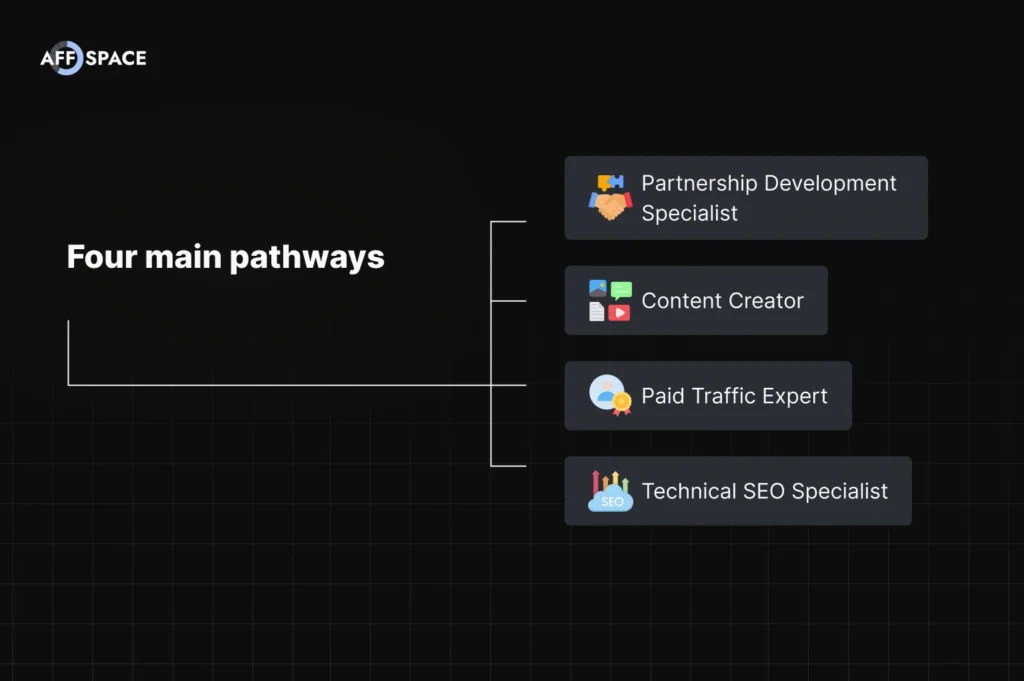
1. Content Creator Specialist
If you love writing, speaking, or teaching, this is your domain. Content creators thrive on producing blogs, YouTube videos, or podcasts that educate audiences while naturally integrating affiliate recommendations as they become an affiliate marketer.
This career path emphasizes authority and trust. As you publish consistent, value-driven content, your expertise compounds — turning your site or channel into an evergreen income engine.
Successful content creators who want to be a successful affiliate marketer focus on:
- Crafting SEO-optimized educational articles
- Building trust through transparency
- Leveraging long-form content that answers key search intent
For inspiration, check our guide on Finding Your Perfect Affiliate Marketing Niche. A clearly defined niche gives your content direction, audience focus, and monetization potential as you start an affiliate marketing business.
2. Technical SEO Specialist
For analytical minds, this specialization offers stability and predictability. Technical SEO experts optimize affiliate websites for organic search traffic, focusing on keyword clustering, backlinking, and site health.
Their success depends on understanding how algorithms evolve within the affiliate marketing industry. SEO-focused affiliates who continually update strategies often outperform those relying solely on social media trends when they become an affiliate marketer.
Technical specialists within the affiliate marketing industry typically:
- Conduct advanced keyword and competitor research
- Create internal linking systems and structured content
- Build multiple niche sites that rank for long-tail terms
This role provides consistent traffic and predictable conversions — perfect for anyone who wants to be a successful affiliate marketer without relying on ads.
3. Paid Traffic Expert
If you’re analytical and enjoy testing variables, paid traffic offers fast scalability. Specialists master advertising platforms such as Google Ads, Meta Ads, or TikTok Ads to drive targeted traffic to affiliate offers as they become an affiliate marketer.
While this path involves financial risk, it rewards precision. Professional affiliate marketer experts in this role:
- Test ad creatives and landing pages for conversions
- Track cost-per-click and ROI daily
- Use remarketing and automation to maximize revenue
Paid traffic affiliates often transition into agency work or partner directly with brands. Their advanced analytics and conversion optimization affiliate marketing skills make them valuable assets in the affiliate marketing industry.
4. Partnership Development Specialist
For relationship-driven professionals, partnership management is an ideal career focus when you start an affiliate marketing business. You’ll work directly with affiliate networks and brands to secure exclusive commissions, bonuses, and co-branded opportunities.
This path requires negotiation, communication, and credibility — affiliate marketing skills that improve with every collaboration. Over time, partnership specialists evolve into affiliate managers or consultants overseeing large-scale programs.
Success in this area depends on understanding people as much as performance metrics — a balance that defines every professional affiliate marketer.
Building Your Personal Brand as an Authority
Learning how to become an affiliate marketer successfully is as much about visibility as it is about strategy. Personal branding turns anonymous marketers into trusted educators whose opinions shape purchasing decisions.
Establishing Thought Leadership
To stand out in a competitive affiliate marketing career, you must provide unique insight. Don’t just repeat what others are saying — contribute your perspective as you become an affiliate marketer.
Publish tutorials, case studies, and behind-the-scenes breakdowns of campaigns. Speak about what worked, what didn’t, and why. Your transparency creates authority far faster than perfect results ever could when you start an affiliate marketing business.
Engage in online communities such as LinkedIn or Reddit to share tips and respond to others’ questions. Guest posting and podcast interviews can also strengthen your reputation as a credible voice in your niche within the affiliate marketing industry.
Creating Your Unique Positioning
Differentiate your brand by defining what you stand for. What’s your personal angle as you become an affiliate marketer — eco-friendly products, software reviews, travel tech, or financial education?
Narrowing your message builds trust faster. Instead of trying to appeal to everyone, focus on solving specific problems for a specific audience. Over time, your content ecosystem becomes a go-to resource as you learn how to be an affiliate marketer.
Regularly review your niche positioning and refine it as your affiliate marketing skills evolve. Your professional image should grow alongside your expertise.
Developing Media Assets
Sustainable branding relies on media diversification. Create a portfolio that combines:
- A blog (for SEO visibility)
- A YouTube or TikTok channel (for engagement)
- An email newsletter (for direct audience relationships)
This multichannel strategy ensures that if one platform changes its algorithm, your reach remains intact. Your long-term goal is to control your audience access — a key milestone in becoming a professional affiliate marketer.
Creating Sustainable Systems for Your Affiliate Marketing Career
Once your brand and specialization are in motion, focus on building systems that make your affiliate marketing career more efficient, scalable, and stable.
Evergreen Content Engines
Evergreen content is your digital real estate — the foundation of recurring revenue within your affiliate marketing career. Articles such as “Best [Product] Tools” or “Step-by-Step Guides” continue to attract visitors for years after publication.
Professional affiliate marketer experts update these resources quarterly to maintain SEO performance. This strategy compounds results, turning single posts into long-term profit sources.
By consistently refining evergreen assets, you reinforce your authority and help others learn how to become an affiliate marketer through actionable, lasting information.
Email Marketing Automation
Email is one of the most powerful tools for long-term relationship building when you start an affiliate marketing business. Segment subscribers by interest, send helpful resources, and introduce affiliate products naturally within educational sequences.
Automation platforms help nurture leads without overwhelming them. Emails provide a direct communication channel — one unaffected by social algorithms.
A strong email strategy is what separates an average affiliate from someone building a truly sustainable business, showing how to be a successful affiliate marketer.
Workflow and Analytics Systems
Every professional affiliate marketer needs operational clarity. Use analytics dashboards to track content performance, ROI, and conversion rates.
By understanding data patterns, you’ll identify which channels deserve more focus and which campaigns underperform. This approach turns your career into a measurable, predictable system — one of the key steps in mastering how to be a successful affiliate marketer.
Managing Finances Like a Professional Affiliate Marketer
Learning how to become an affiliate marketer also means learning how to manage money like a business owner. Many new affiliates fail not because they lack traffic or sales, but because they treat finances casually instead of professionally.
Understanding Income Volatility
Affiliate income is rarely steady, especially at the beginning. Algorithms shift, seasonal interest changes, and affiliate programs update their payout structures. To succeed in affiliate marketing as a career, treat fluctuations as part of the job, not a sign of failure.
Keep savings for at least three to six months of living expenses. During high-income periods, set aside funds to sustain you when revenue dips. This allows you to reinvest strategically — not react emotionally.
Professional affiliate marketer experts review financial performance quarterly. They track which content or campaigns yield the best ROI and allocate more budget to those channels. Managing money intelligently is what turns someone trying to become an affiliate marketer into someone who truly thrives in the business.
Reinvesting for Growth
To scale your affiliate marketing career, reinvest roughly 20–30% of profits into growth activities:
- Upgrading affiliate tracking or analytics tools
- Hiring content writers or designers
- Testing new ad platforms or automation software
- Enrolling in advanced SEO or marketing training
Reinvestment builds leverage. Instead of exchanging time for results, your systems begin generating value independently. This professional discipline is what defines a long-term affiliate marketing career instead of a short-lived side project.
Tax and Legal Compliance
A professional affiliate marketer must comply with legal and tax standards. Keep records of expenses, invoices, and payouts. Depending on your region, registering as a business or LLC can provide tax advantages and liability protection.
Transparency is essential for credibility. Always follow FTC disclosure guidelines when sharing affiliate links. Clear communication builds trust — a cornerstone of how to be a successful affiliate marketer long-term.
Navigating Challenges in the Affiliate Marketing Industry
The affiliate marketing industry is competitive and constantly evolving. Success depends on how quickly you adapt to changes and learn from obstacles as you become an affiliate marketer.
Handling Setbacks and Income Drops
Even the most experienced affiliates experience traffic dips, lost rankings, or terminated programs. Instead of panicking, diversify. Use multiple traffic sources (SEO, social, email) and multiple affiliate programs to reduce risk when you start an affiliate marketing business.
A professional approach involves analyzing data, pinpointing weaknesses, and rebuilding smarter. Every challenge you overcome strengthens your long-term stability and teaches valuable affiliate marketing skills for future projects.
Adapting to Industry Changes
Technology and consumer behavior evolve fast within the affiliate marketing industry. The rise of AI tools, privacy regulations, and platform updates means continuous education is essential.
Subscribe to industry newsletters, attend affiliate conferences, and engage in online communities. Staying informed ensures you remain among the first to capitalize on new opportunities. This commitment to lifelong learning is central to understanding how to become an affiliate marketer who stays competitive year after year.
Maintaining Psychological Resilience
The emotional side of entrepreneurship is often overlooked. Success in affiliate marketing as a career requires persistence through uncertainty.
Practice stress management, track progress weekly, and focus on long-term goals instead of daily fluctuations. Surround yourself with peers and mentors who understand your journey. Building resilience transforms setbacks into stepping stones — the mindset of every successful affiliate who wants to be a successful affiliate marketer.
Advanced Growth and Leadership Strategies
Once your systems produce consistent income, it’s time to scale. The transition from independent affiliate to business leader happens gradually — but strategically.
Expanding Revenue Streams
Experienced affiliates who become an affiliate marketer don’t rely solely on commissions. They create digital products, offer coaching, launch courses, or monetize audiences through newsletters and communities.
Diversifying revenue increases stability and helps you reach new audiences. It’s also a natural step for anyone who’s learned how to start an affiliate marketing business and now wants to grow beyond it.
Building Team Support
Scaling requires delegation when you start an affiliate marketing business. Start outsourcing repetitive tasks such as editing, design, or outreach. Clear documentation and workflow systems ensure consistency.
A team allows you to focus on high-value activities — strategy, partnerships, and leadership — turning your operation into a true digital enterprise within the affiliate marketing industry.
Preparing Exit or Scale Options
A well-structured affiliate business is an asset that can sell for two to four times its annual profit. Keep detailed analytics, content records, and partnership data to prove performance.
Whether you plan to sell your business or scale it into a brand, these records enhance credibility and valuation. Long-term vision is the difference between someone who wants to become an affiliate marketer and someone who becomes a respected digital entrepreneur.
Committing to Lifelong Learning
The affiliate marketing industry changes constantly — and so should you. Dedicate time weekly to study new ad formats, SEO updates, or AI-based analytics.
The best affiliates never stop learning. They experiment, analyze, and evolve. That’s how they sustain growth even as algorithms or markets shift within affiliate marketing as a career.
FAQ: Common Questions About Building an Affiliate Career
Is affiliate marketing a good career?
Yes. Affiliate marketing as a career offers flexibility, independence, and scalability. When approached professionally, it provides multiple income streams and valuable digital affiliate marketing skills that apply across industries.
How long does it take to become a successful affiliate marketer?
Most people begin earning within six to twelve months, but consistent income typically requires one to two years. Progress depends on how seriously you approach skill development, content quality, and testing when you become an affiliate marketer.
Can you make a living as an affiliate marketer?
Absolutely. Many professional affiliate marketer experts generate full-time income through evergreen content, diversified traffic, and strong audience trust. The key is learning how to become an affiliate marketer who focuses on systems, not shortcuts.
What skills are essential for affiliate marketing success?
Strong writing, SEO, data analysis, and communication are crucial affiliate marketing skills. Over time, you’ll also master technical tools, automation, and analytics that make you a professional affiliate marketer.
Is affiliate marketing still worth it in 2026?
Yes. The affiliate marketing industry continues to grow globally. With automation, AI integration, and expanding e-commerce, the demand for skilled affiliates is higher than ever. Those who become an affiliate marketer now position themselves for long-term opportunity.
Conclusion: Building Your Affiliate Marketing Career for the Future
Learning how to become an affiliate marketer is not a single project — it’s an evolving career path that combines creativity, data, and entrepreneurship.
When you treat affiliate marketing as a career, commit to consistent learning, and approach your business with professionalism, you open the door to true financial independence as you become an affiliate marketer.
Whether you dream of replacing a full-time job or building a scalable digital brand, the foundation is the same: consistent value creation, smart analytics, and ethical promotion. Understanding how to be an affiliate marketer means mastering these fundamentals.
The affiliate marketing industry continues expanding across every sector of the digital economy. Those who master how to become an affiliate marketer today are building the kind of career that will remain relevant — and rewarding — for decades to come.
By developing strong affiliate marketing skills, following this guide on how to start an affiliate marketing business, and committing to excellence, you position yourself as a professional affiliate marketer ready to thrive in this dynamic field.
