

SEO Traffic in Affiliate Marketing: From Suppression to Scalable Growth
How much opportunity exists to generate affiliate revenue through organic search? This is a question many affiliate marketers ask — and for good reason. With each Google Core Update, SEO guidelines shift, and strategies that were effective a year ago can suddenly put your site at risk.
This case study examines an affiliate project in the SaaS and Instagram niche that went from declining visibility to sustainable, scalable organic growth. By using AFFspace as the main affiliate platform, the SEO specialist was able to track which links and content were actually earning money and make smart decisions to improve both Google rankings and affiliate profits. It not only uncovers the mistakes that caused the drop but also outlines the concrete steps taken to restore both Google’s trust and user confidence.
When Organic Visibility Begins to Drop
Earlier this year, one of affiliate domains — part of the AFFspace affiliate network — suddenly lost a large portion of its organic traffic after the Google March Core Update. The site had been performing consistently well, but SEO specialists saw its pages drop from top search results almost overnight, and user engagement fell along with it.
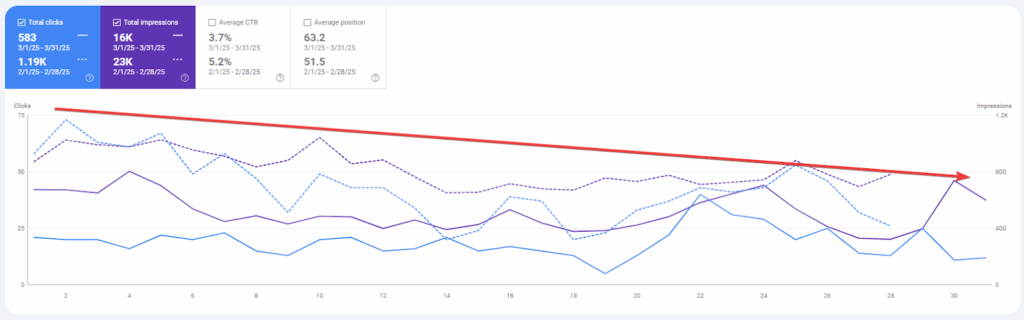
This prompted a full review of the site’s structure, content, and keywords to figure out exactly what went wrong and to plan a steady, long-term recovery.
What Was Found
After a thorough audit of the site, an SEO expert identified several key issues. Once these were corrected, both rankings and organic traffic began to improve.
Mistakes:
– Choosing the wrong domain;
– Overly promotional;
– Using keywords that Google doesn’t like;
– For the “reviews” cluster — dry descriptions without real reviews.
What Works:
– Using a branded domain;
– Careful advertising: promote a mix of several products instead of just one (even if others aren’t partners, include a short description and comparison);
– A detailed “How it works” section;
– Reviews: analyze feedback from Reddit, Trustpilot, etc.;
– Add user cases “How i tested product”
Choosing the Right Domain
One of the first mistakes made was choosing a domain that included the word “Insta.” At the time, it seemed like a clever SEO tactic — using an Instagram-related keyword to attract more organic traffic. In practice, however, it backfired. Google’s algorithms often flag domains containing sensitive or trademarked terms like “Insta,” “spy,” or “hack,” especially in niches connected to privacy, data access, or social media tools.
While this didn’t lead to an official penalty, it resulted in shadow suppression — a gradual decline in rankings, traffic, and visibility without any clear warning. After the site was rebranded to a clean, original domain — guided by insights from AFFspace’s affiliate analytics tools — performance improved noticeably: organic traction returned, rankings stabilized, and user trust increased.
Balancing Promotion and User Experience
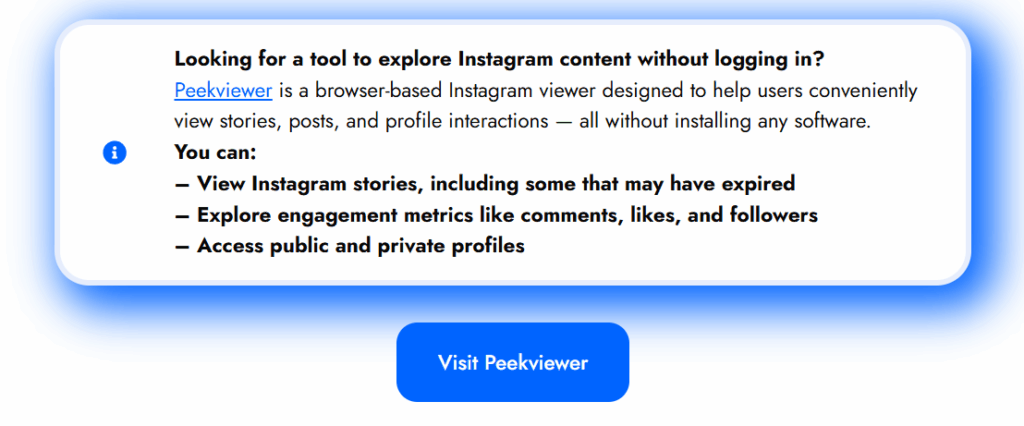
The homepage and landing pages were crowded with multiple CTA blocks and buttons, all aggressively promoting a single product. Phrases such as “the best” and “the top” appeared repeatedly. To Google, this signaled not an authentic review or comparison site, but rather overt advertising for one SaaS brand.
A more balanced strategy was later adopted, combining promotional elements with genuinely helpful content:
- Simplified the layout to highlight one primary CTA and a few supporting buttons.
- Introduced comparisons that mentioned other brands, including non-partners, to make reviews appear more credible and informative.
- Shifted the messaging focus from promoting a single product to helping users make informed choices through real comparisons and transparent insights.
The Risk of “Dangerous” Keywords
Initially, the site targeted highly relevant but potentially “dangerous” keywords — terms that Google often flags as sensitive or risky. The tool itself focused on Instagram, with its primary feature being the ability to “view private Instagram accounts.” Naturally, this led to the use of phrases such as “best private Instagram viewer,” “stalk private account,” and “view stories in ghost mode.”
Over time, these keywords triggered gradual suppression. After this trend was identified through AFFspace’s traffic analytics dashboard, the keyword strategy shifted toward intent-aligned and compliant terms — for example, “browse Instagram content without login” or “view public stories safely.” These were incorporated into CTAs and H2 headings, while the use of sensitive keywords was limited to the main text. This adjustment kept the content compliant, user-friendly, and aligned with Google’s search quality expectations.
Adding Real User Context
When describing any tool, it’s best to move beyond dry, generic explanations. Content becomes more engaging and credible when it’s based on real user experiences or detailed case examples.
An effective review covers the complete journey — from initial interest to final outcomes:
- The reason for exploring the tool
- How it was accessed (subscription, demo, or free trial)
- Setup time and any challenges encountered
- The actual features and functionality delivered
- Comparisons with similar tools in the market
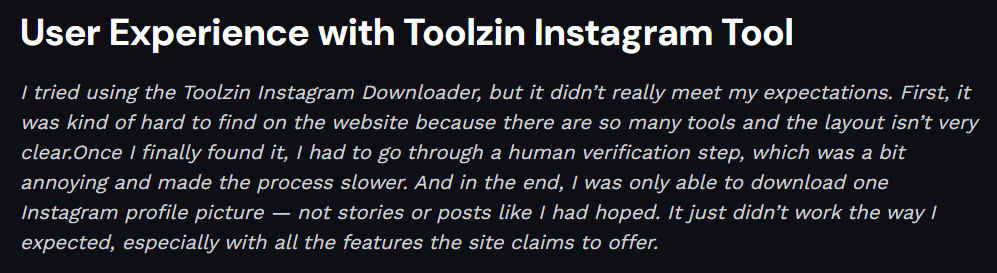
Writing from a first-person or experiential perspective, including both advantages and drawbacks, creates a more honest and authentic narrative. Incorporating third-party reviews from platforms such as Trustpilot or Reddit can further strengthen credibility by adding diverse viewpoints and independent validation.
Finding the Most Relevant Clusters
Don’t Focus Only on Competitor-Based or High-Volume Keywords
Many sites focus only on high-volume or competitor-driven content clusters. While this can be tempting, it often means facing tough competition and lower chances of ranking. Targeting clusters that competitors haven’t fully explored can be more effective. Tools like Ahrefs → Matching Terms → Questions help uncover real user questions and reveal untapped opportunities.
Target Brands with Low Review Visibility
Finding niche brands that get some search traffic but lack fresh or comprehensive reviews can be a smart strategy. Writing in-depth, up-to-date reviews for these brands not only fills missing content but also attracts consistent traffic and boosts presence in less competitive spaces.
Leverage Trending Topics for Short-Term Traffic
Alongside evergreen content, keeping track of trending topics can help capture short-term traffic spikes. Monitoring conversations on Reddit, X (Twitter), TikTok, or niche forums reveals what people are talking about. Creating timely reviews or comparison articles that connect these trends to the niche can boost relevance and support long-term content goals.
How AFFspace Helped Turn SEO Insights into Real Growth
After the site began recovering in Google rankings, the next goal was clear — to understand what actually worked and how to scale it further. That’s where AFFspace made all the difference.
Using the platform’s built-in analytics, an SEO specialist could see which content clusters were driving the most engaged traffic and which offers performed best. It wasn’t just about tracking clicks — it was about understanding intent and refining the entire strategy around what truly converts.
With AFFspace, it became possible to:
- Monitor all affiliate offers and SEO campaigns in one clean dashboard.
- Spot which pages delivered the strongest mix of rankings and conversions.
- Test and compare different approaches — from keyword clusters to content types.
- Make smarter, data-driven updates that consistently improved both visibility and ROI.
The Results
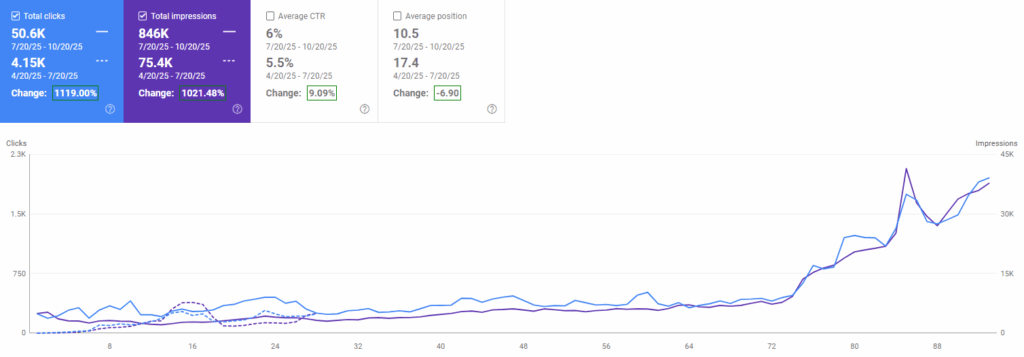
After making these updates — including domain rebranding, content restructuring, safer keyword strategies, and real user stories — the impact was clear:

- Organic traffic grew 12 times in just three months.
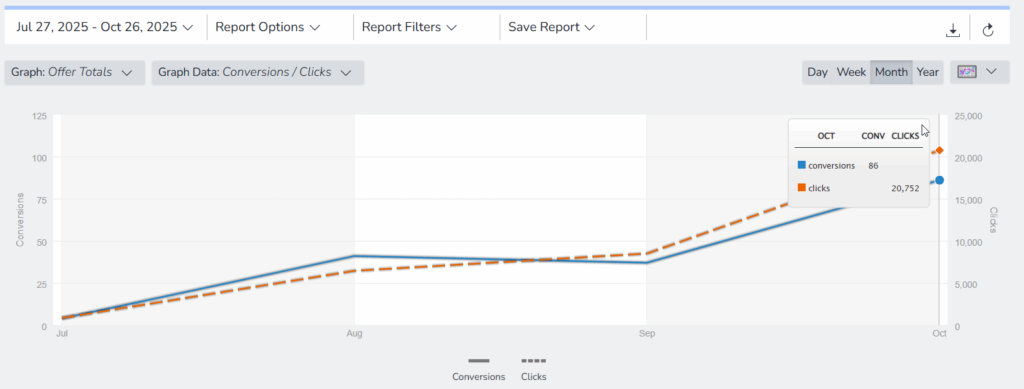
- Conversions reached 86 per month, showing stronger engagement and higher user trust.
- Ranking volatility dropped noticeably, even through later Google updates.
- Content stopped swinging with every algorithm change and started building steady, compounding visibility.
Conclusion
When affiliate content focuses on helping and informing users, rather than just pushing sales, it earns both audience trust and Google’s approval. By combining this approach with insights from AFFspace, growth becomes less guesswork and more predictable.
What started as a struggling domain became one of the standout SEO recovery cases within the AFFspace network. Using smart keyword strategies, authentic content, and real-time analytics from AFFspace, the SEO specialist could see exactly what drove conversions, adjust content to match, and steadily scale results month after month.
