

What Is an Affiliate Link? How to Promote Them to Drive Traffic

Affiliate marketing has become one of the most accessible ways to earn income online. At the heart of this business model lies the affiliate link—a simple yet powerful tool that connects content creators with brands and enables commission-based earnings. Understanding what affiliate links are and mastering effective promotion strategies can transform your digital presence into a sustainable revenue stream.
This comprehensive guide explains the affiliate link meaning, explores how they work technically, and reveals proven promotion methods to maximize your earnings.
What Is an Affiliate Link? (With Real Example)
An affiliate link is a unique tracking URL containing a special identifier code that brands provide to marketing partners (called “affiliates”) to promote their products or services. When someone clicks your affiliate link and completes a purchase or desired action, the brand tracks this conversion through your unique ID and pays you a commission.
📌 Affiliate Link: Simple Definition
An affiliate link is a unique tracking URL that contains your personal ID. When someone clicks it and makes a purchase, you earn a commission. The link tracks sales back to you for 24 hours to 120 days depending on the program.
Understanding Affiliate Link Meaning
The affiliate link meaning extends beyond a simple URL—it represents a performance-based marketing relationship between you and a merchant. Each affiliate link contains several key components:
Your Unique Affiliate ID – This identifier distinguishes your promotions from other affiliates marketing the same products, ensuring you receive proper credit for conversions.
Tracking Parameters – Technical elements that monitor user behavior, including clicks, conversions, and attribution windows.
Destination URL – The specific product page, landing page, or merchant website where users arrive after clicking.
A typical affiliate link structure looks like: https://example.com/product?ref=youraffiliateID&source=blog
Benefits of Affiliate Marketing
Affiliate marketing offers compelling advantages that make it attractive for both newcomers and experienced digital marketers:
Passive Income Potential – Once you’ve created quality content containing affiliate links, you can continue earning commissions as your audience discovers and engages with your recommendations over time.
Low Startup Costs – You don’t need to create products, manage inventory, handle customer service, or process payments. Your investment focuses primarily on content creation and audience building.
Location Independence – Affiliate marketing works entirely online, allowing you to operate from anywhere with internet access while promoting products to global audiences.
Scalability – As your audience grows and you refine your promotion strategies, your earning potential scales accordingly without proportional increases in operational complexity.
Product Flexibility – Test different affiliate offers quickly, pivot to new niches as markets evolve, and promote multiple products simultaneously without inventory risk.
How Affiliate Links Work: The 5-Step Tracking Process
Understanding the technical mechanics behind affiliate links helps you optimize placement, troubleshoot tracking issues, and select programs with favorable attribution models.
The Technical Process
When someone clicks your affiliate link, several automated processes occur:
Step 1: Click Registration – The affiliate network or merchant’s tracking system records the click, capturing data including timestamp, traffic source, device type, and geographic location.
Step 2: Cookie Placement – A tracking cookie is stored in the user’s browser containing your affiliate ID and click timestamp. This cookie has an expiration period called the “cookie duration” or “attribution window”—typically ranging from 24 hours to 90 days depending on the program.
Step 3: User Journey – The potential customer browses the merchant’s site, potentially leaving and returning multiple times. Throughout this period, the cookie remains active, continuously associating the user with your affiliate ID.
Step 4: Conversion Event – When the user completes a purchase, subscription, or lead action, the merchant’s system detects active affiliate cookies and attributes the conversion to you.
Step 5: Commission Recording – The sale appears in your affiliate dashboard, typically in pending status while the merchant validates the transaction to prevent fraud. Once approved, your commission becomes payable according to the program’s payment schedule.
Attribution Models and Cookie Duration
Different affiliate programs employ various attribution models affecting commission credit:
Last-Click Attribution – The most common model where the final affiliate link clicked before purchase receives full commission. This favors affiliates who close the sale but may undervalue those who introduce the product.
First-Click Attribution – The first affiliate link in the customer journey receives commission, rewarding initial discovery and awareness-building efforts.
Multi-Touch Attribution – Commission is distributed among multiple affiliates who influenced the purchase, recognizing the collaborative nature of customer journeys.
Cookie duration significantly impacts earning potential. Programs offering 24-hour cookies (like Amazon Associates) require immediate purchase decisions, while 30-90 day windows allow customers time to research before converting.
How to Get Affiliate Links (Free Approval Guide)(Ranked by Conversion)
Accessing affiliate links requires joining affiliate programs, which come in two primary forms: direct merchant programs and affiliate networks.
Finding and Joining Affiliate Programs
Direct Merchant Programs involve applying directly to companies whose products align with your audience. Major brands like Shopify, Bluehost, and Target operate proprietary programs with dedicated affiliate managers and customized promotional resources.
Affiliate Networks aggregate thousands of merchants under unified platforms, simplifying program management. Popular networks include:
- ShareASale – Diverse merchant selection across numerous niches
- CJ Affiliate (Commission Junction) – Enterprise brands with competitive commissions
- ClickBank – Digital products and information offerings
- Amazon Associates – Massive product catalog with 24-hour cookie window
- Impact – Advanced tracking technology and premium brands
Application and Approval Process
Most affiliate programs require approval before granting link access. Strengthen your application by:
Establishing Your Platform – Whether a blog, YouTube channel, social media presence, or email list, demonstrate a professional, active platform with engaged audience.
Defining Your Niche – Programs favor applicants with clear audience demographics and content focus aligned with their products.
Providing Traffic Data – Honest statistics about your reach help programs assess promotional capacity. Many have minimum traffic requirements.
Creating Quality Content – Existing product reviews, tutorials, or industry articles demonstrate your ability to promote effectively.
Some programs approve instantly while others conduct manual reviews taking several days. Premium programs with higher commissions typically maintain stricter approval standards.
How to Set Up an Affiliate Link
Once approved, generating affiliate links is straightforward:
- Log into your affiliate dashboard
- Navigate to link generation tools (often labeled “Get Links” or “Create Links”)
- Search for specific products or pages you want to promote
- Select link type (text link, banner, deep link)
- Generate and copy your unique tracking URL
Deep Linking Capabilities – Many programs allow creating affiliate links to any page on the merchant’s website, not just their homepage. This enables:
- Direct linking to specific products
- Sending traffic to relevant category pages
- Connecting to seasonal promotions or sales
- Creating contextually appropriate user experiences
Tracking Customization – Use custom tracking IDs or subIDs to organize campaigns, distinguish traffic sources, and analyze performance across different promotional channels.
What Is the Best Way to Promote Affiliate Links?
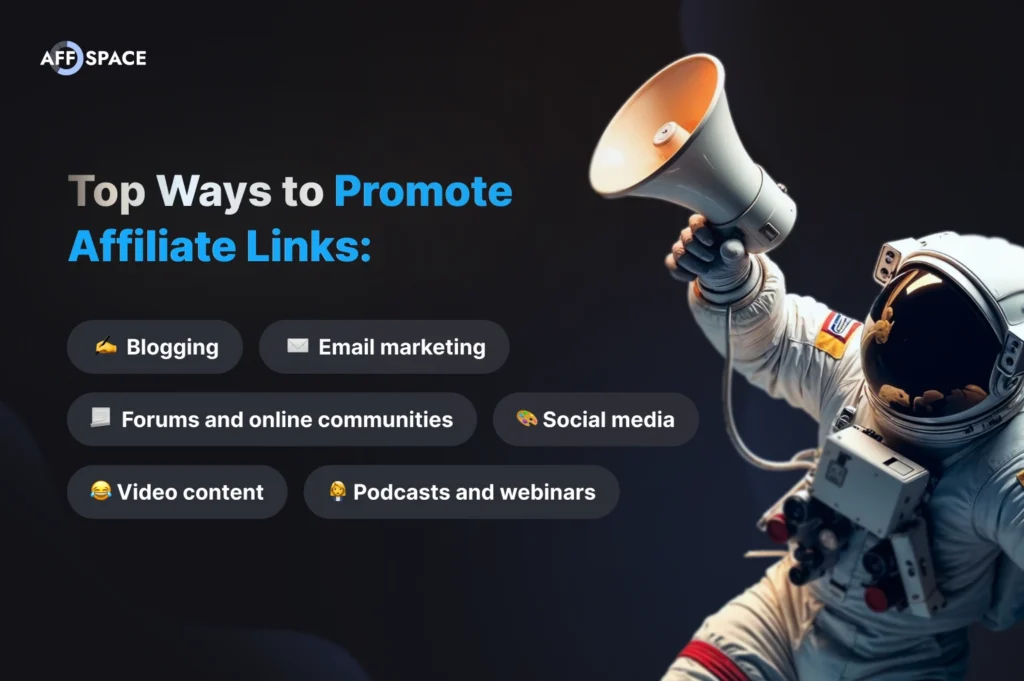
Successful affiliate promotion requires strategic placement across multiple channels where your target audience actively engages with content.
Add Affiliate Links to Blog Posts
If you maintain an active blog with consistent organic traffic, incorporating affiliate links within relevant, valuable content represents the highest-converting promotion method.
Content Types That Convert:
Product Reviews – Share honest, detailed evaluations based on personal experience. Include both strengths and limitations to build credibility while naturally incorporating affiliate links.
Comparison Posts – Evaluate multiple products or services within a category, helping readers make informed decisions while presenting affiliate options for each.
Tutorial Content – Create how-to guides demonstrating product usage, naturally including affiliate links as implementation resources.
Resource Pages – Curate comprehensive lists of recommended tools, products, or services within your niche, serving as evergreen affiliate hubs.
Optimization Tips:
- Focus on creating high-quality blog content that genuinely helps your audience
- Incorporate affiliate links naturally within valuable context
- Use relevant keywords to attract organic search traffic
- Update content regularly to maintain freshness and accuracy
- Include clear, compelling calls-to-action near affiliate links
Include Affiliate Links in Email Marketing
Email marketing delivers high conversion rates due to direct audience access and established relationships.
Building Your Email List:
- Offer valuable lead magnets (ebooks, guides, templates) in exchange for email addresses
- Create opt-in opportunities throughout your website
- Deliver consistent value to maintain subscriber engagement
Email Promotion Strategies:
Product-Focused Campaigns – Send dedicated emails highlighting specific products or services with prominent affiliate links and clear value propositions.
Newsletter Integration – Include relevant product recommendations naturally within regular newsletters, maintaining the primary focus on valuable content.
Educational Series – Create automated email sequences teaching specific skills while recommending affiliate tools that facilitate implementation.
Exclusive Offers – Share special discount codes or limited-time promotions available only to your email subscribers, creating urgency and exclusivity.
Expand Reach Through Social Media Platforms
Social media offers vast audiences and diverse content formats for affiliate promotion.
Platform-Specific Strategies:
Instagram and TikTok – Create visually engaging product demonstrations, unboxing content, or before-and-after transformations. Use link-in-bio tools to house multiple affiliate links since direct linking is limited.
YouTube – Produce detailed product reviews, comparison videos, or tutorial content with affiliate links prominently featured in video descriptions and mentioned verbally during content.
Facebook – Share valuable content linking to blog posts containing affiliate links rather than promoting affiliate offers directly, which audiences often perceive as spammy.
Pinterest – Design compelling pins showcasing products or how-to graphics that drive traffic to your affiliate content. Pinterest’s visual nature and evergreen content discoverability make it excellent for affiliate marketing.
Twitter/X – Share quick product recommendations, tips, or insights with shortened affiliate links, participating authentically in relevant conversations.
Important Considerations:
- Avoid direct affiliate link promotion on most social platforms
- Link to your own content (blog posts, videos) containing affiliate recommendations
- Engage authentically with your audience rather than constantly promoting
- Follow each platform’s specific policies regarding affiliate links
- Always include proper affiliate disclosure
For comprehensive guidance on developing your overall approach, explore our affiliate marketing strategy resource.
Add Affiliate Links to Video Content
Video content drives exceptional engagement and builds trust through visual demonstration.
YouTube Strategy:
- Create detailed product reviews or unboxing videos
- Produce tutorial content showing products in action
- Include affiliate links prominently in video descriptions
- Mention links verbally during videos with clear calls-to-action
- Use YouTube cards and end screens directing viewers to affiliate products
Repurposing Content: Transform existing blog posts into video format, adding updated information and visual demonstrations. This maximizes content value while reaching audiences who prefer video consumption.
Performance Tracking: Monitor which videos drive the most affiliate clicks and conversions, then create more content around similar topics or products. Use affiliate link software like ClickMeter or Pretty Links to track detailed performance metrics.
Leverage Podcasts and Webinars
Audio and live content formats enable direct audience engagement and authentic product recommendations.
Podcast Integration:
- Mention affiliate products naturally during relevant discussions
- Include affiliate links in show notes and episode descriptions
- Create dedicated product review or recommendation episodes
- Offer exclusive discount codes for podcast listeners
Webinar Opportunities:
- Share affiliate links in chat during live presentations
- Include links in follow-up materials and recordings
- Demonstrate products during webinar presentations
- Address audience questions about recommended products
Live formats build particularly strong trust, making affiliate recommendations more effective when delivered authentically during valuable educational content.
Engage in Forums and Online Communities
Strategic community participation drives targeted traffic while establishing authority within your niche.
Platform Selection:
- Reddit – Participate genuinely in relevant subreddits, providing value before occasional promotional content
- Quora – Answer questions thoroughly and helpfully, naturally mentioning relevant products when appropriate
- Niche Forums – Engage actively in specialized communities related to your market
Best Practices:
- Read and follow each community’s promotional policies
- Focus primarily on providing genuine value and building trust
- Link to your own content rather than direct affiliate links when possible
- Build credibility through consistent, helpful participation before promotion
- Avoid spam-like behavior that damages reputation
Important Note: Many forums prohibit direct affiliate links. Instead, establish yourself as a trusted community member, then naturally mention your website or content where affiliate links reside.
Building Trust and Transparency with Your Audience
Long-term affiliate marketing success depends fundamentally on audience trust and transparent communication.
Creating Valuable Content First
Prioritize audience needs over commission potential. Recommend products you genuinely believe in and that truly serve your audience’s interests. Honest recommendations, including both advantages and limitations of products, build credibility that drives sustainable conversions.
The Importance of Disclosure
Legal Requirements: Federal Trade Commission (FTC) regulations require clear disclosure of affiliate relationships. Include visible statements like “This post contains affiliate links” near your first affiliate link and at the beginning of content.
Platform-Specific Disclosure:
- Blog posts – Clear written disclosure before affiliate content
- YouTube videos – Verbal mention and written description disclosure
- Social media – #ad or #affiliate hashtags visible without clicking “more”
- Email – Clear statement within message content
Proper disclosure demonstrates transparency, protects you legally, and reinforces trust by showing respect for your audience’s right to informed decisions.
Sharing Personal Experience
The most effective affiliate promotion comes from genuine personal experience. Share specific results you’ve achieved, problems products solved for you, and honest assessments of whether products deliver promised value. Authenticity resonates far more powerfully than generic product descriptions copied from merchant websites.
How I Went From 0.5% to 4.2% Click-Through Rate
When I started affiliate marketing in 2023, I made every mistake possible with links.
I plastered them everywhere. Sidebar banners. Pop-ups. Three links per paragraph. I thought more links = more clicks.
My CTR: 0.5%
And I was confused why people weren’t buying. “The product is great!” I thought. “Why won’t they click?”
Phase 1: The “Spray and Pray” Approach (Months 1-3)
What I did:
- Added affiliate links to every paragraph
- Used “BUY NOW” buttons everywhere
- Linked to 12 different products in one article
Result: Readers felt sold to, not helped. They bounced.
The wake-up call: A reader commented: “This feels like an ad, not an article.”
Ouch. But fair.
Phase 2: The “Value First” Rule (Months 4-6)
I made one change: No affiliate links in the first 500 words.
Instead, I wrote pure educational content. Helped readers solve their problem. Built trust.
Only after providing genuine value did I mention: “If you’re looking for a tool to implement this, I use [Product]. Here’s why…”
CTR jumped to 1.8%
Not amazing, but 3.6x better.
Phase 3: Comparison Tables (Months 7-9)
I stopped writing “This product is amazing!” posts.
Instead, I created comparison tables showing 3-4 options:
| Feature | Tool A | Tool B | Tool C |
|---|---|---|---|
| Price | $29/mo | $49/mo | $99/mo |
| Best for | Beginners | Growing teams | Enterprises |
| My rating | 4.5/5 | 4.2/5 | 4.7/5 |
Key: I included non-affiliate options. I gave honest ratings (not everything got 5 stars). I explained WHO each tool was for.
CTR: 3.1%
Readers trusted me because I wasn’t pushing one option. I was helping them choose.
Phase 4: Soft CTAs (Months 10-12)
I removed aggressive “BUY NOW” buttons.
I replaced them with soft CTAs:
- ❌ “BUY NOW AND SAVE 50%!”
- ✅ “If you want to try the tool I used for this project, here’s the link”
- ❌ “CLICK HERE TO PURCHASE”
- ✅ “I wrote a detailed review of my experience here”
The language became conversational. Like recommending a restaurant to a friend.
CTR: 4.2%
And here’s the kicker: Refund rates dropped too.
Because I wasn’t hyping products, I was attracting buyers who actually needed them. Better fit = fewer refunds.
The Numbers That Matter
| Approach | CTR | Refund Rate | Monthly Earnings |
|---|---|---|---|
| Spray and Pray | 0.5% | 18% | $340 |
| Value First | 1.8% | 12% | $890 |
| Comparison Tables | 3.1% | 8% | $1,420 |
| Soft CTAs | 4.2% | 5% | $2,100 |
Same traffic. Same products. Different approach.
What I Do Now (2026)
Every article follows this formula:
- 0-500 words: Pure value, zero links, zero pitch
- 500-1000 words: Mention I used a tool, explain why
- 1000+ words: One comparison table with 3-4 options (mix of affiliate and non-affiliate)
- Conclusion: Soft CTA with context
The result? Readers ask for my affiliate links in comments. They trust my recommendations because I’ve earned it.
Context and trust beat aggressive promotion every time. Try it for 30 days and watch your CTR climb.
Tracking and Optimizing Performance
Systematic performance monitoring enables data-driven optimization that increases earnings over time.
Key Metrics to Monitor
Click-Through Rate (CTR) – Percentage of content viewers clicking your affiliate links, indicating relevance and compelling presentation.
Conversion Rate – Percentage of clicks resulting in completed actions (purchases, sign-ups), reflecting audience quality and product-market fit.
Earnings Per Click (EPC) – Average commission earned per link click, helping compare product and program effectiveness.
Cookie Duration Impact – Track how conversion timing relates to cookie windows, informing program selection strategy.
Using Affiliate Link Software
Tools like AffiliateWP, ThirstyAffiliates, or ClickMeter provide enhanced tracking capabilities beyond standard affiliate dashboards:
- Monitor link performance across different content pieces
- Track traffic sources for each affiliate link
- A/B test different link placements or presentations
- Identify top-performing products and promotional methods
Optimization Strategies
Based on performance data:
- Create more content around high-converting products
- Improve or remove underperforming affiliate links
- Test different link placements within content
- Experiment with various calls-to-action
- Focus on promotional channels driving best results
For beginners seeking comprehensive guidance on starting your affiliate journey, our affiliate marketing for beginners guide provides step-by-step instructions.
Avoiding Common Affiliate Marketing Mistakes
Understanding frequent pitfalls helps you build sustainable affiliate income while maintaining audience trust.
Over-Promotion – Excessive affiliate links throughout content appears desperate and damages credibility. Balance promotional content with genuinely valuable information.
Poor Product Selection – Promoting low-quality products or irrelevant items for quick commissions undermines long-term success. Choose products that genuinely serve your audience.
Inadequate Disclosure – Failing to clearly identify affiliate relationships violates regulations and erodes trust. Always maintain transparent, conspicuous disclosure.
Neglecting Mobile Experience – With mobile traffic dominating most niches, ensure affiliate links and content display properly across all devices.
Ignoring Analytics – Operating without performance data leads to missed optimization opportunities. Regular review of metrics enables strategic improvement.
Putting Commissions Before Audience – Prioritizing highest-paying products over audience needs destroys trust. Always serve your audience first, and sustainable income follows.
Conclusion
Affiliate links represent a powerful tool for monetizing digital content while providing value to your audience. Success requires understanding what affiliate links are, how they work technically, and implementing strategic promotion across multiple channels where your audience actively engages.
Start by joining relevant affiliate programs aligned with your niche and audience interests. Focus on creating genuinely valuable content that serves your audience, naturally incorporating affiliate links where they provide helpful solutions. Maintain transparency through proper disclosure, building trust that drives long-term sustainable income. Proper disclosure is not just a best practice—it’s a legal requirement. The U.S. Federal Trade Commission provides clear guidelines on how affiliate relationships should be disclosed across blogs, social media, email, and video content to maintain transparency and consumer trust. You can review the official FTC guidance in Disclosures 101 for Social Media Influencers.
As you gain experience, systematically track performance data to identify what works, then optimize based on concrete metrics rather than assumptions. Avoid common mistakes like over-promotion or poor product selection that damage credibility.
Remember that affiliate marketing success comes from consistently delivering value to your audience while strategically recommending products you genuinely believe in. Master these fundamentals, and affiliate links become a reliable revenue stream supporting your online business. Ready to explore specific affiliate opportunities? Learn about choosing the right programs in our guide on selecting the best affiliate programs.
