

Why Affiliate Tracking Is Essential for Marketing Success

In the competitive landscape of performance marketing, success isn’t determined by effort alone—it’s measured by results. This is where affiliate tracking becomes not just useful, but absolutely essential. Without proper tracking systems in place, affiliate marketers and program managers operate in complete darkness, unable to identify what works, what fails, and where opportunities lie.
Affiliate tracking is the foundation of every successful affiliate marketing operation. It’s the difference between profitable campaigns and money-losing ventures, between scaling winners and doubling down on losers. Yet many marketers underestimate its importance until they’ve already wasted significant resources on untracked campaigns.
This comprehensive guide explores why affiliate tracking matters, how it transforms marketing performance, and what every marketer needs to know about implementing effective tracking systems. Whether you’re running an affiliate program like AFFspace or promoting products as an affiliate, understanding tracking fundamentals is your gateway to sustainable growth.
What Is Affiliate Tracking and Why Does It Matter?
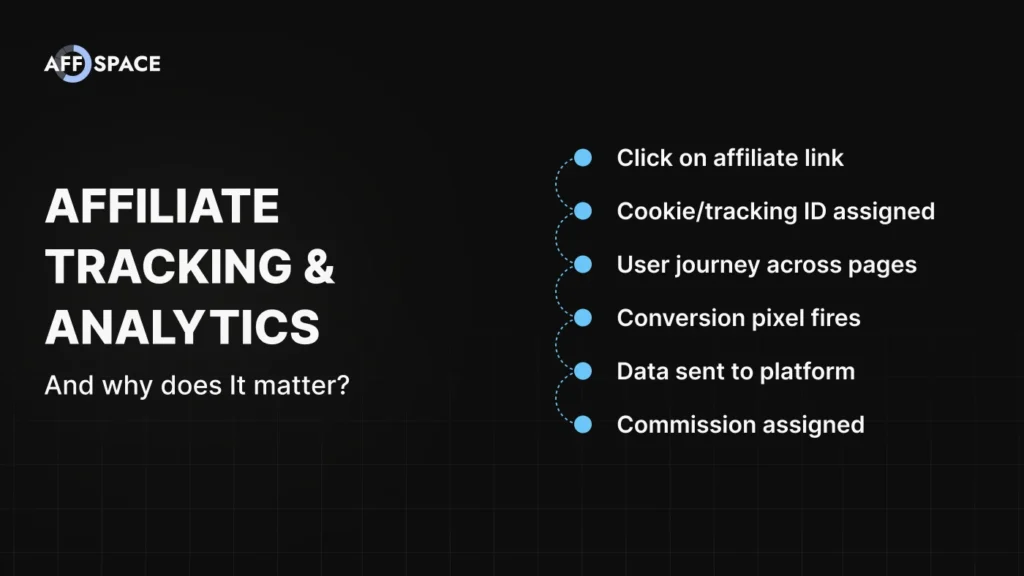
Affiliate tracking is the process of monitoring and recording every interaction between affiliates, customers, and merchants throughout the buyer journey (see How Affiliate Marketing Works for fundamentals). From the initial click on an affiliate link to the final conversion and beyond, affiliate tracking captures critical data that informs decision-making.
At its core, affiliate tracking answers three fundamental questions:
- Where did this customer come from? Which affiliate, campaign, or traffic source generated the lead?
- What actions did they take? What path did they follow before converting?
- What value did they create? How much revenue did this referral generate?
Without affiliate tracking, these questions remain unanswered. You might see sales happening, but you can’t attribute them to specific affiliates or campaigns. This makes it impossible to reward top performers, optimize underperforming efforts, or make data-driven strategic decisions.
The Business Case for Affiliate Tracking
Consider two scenarios:
Scenario A: No Tracking You recruit 50 affiliates to promote your products. Some generate sales, but you can’t identify which ones. You pay commissions manually based on honor system reports. When sales increase or decrease, you don’t know why. You invest marketing budget blindly, hoping something works.
Scenario B: Comprehensive Affiliate Tracking You recruit 50 affiliates with unique tracking links. Your system automatically attributes every sale to the correct affiliate. You discover that 5 affiliates generate 80% of revenue. You identify their successful strategies and share them with others. You cut 10 non-performing affiliates and increase commissions for top performers. Revenue grows predictably.
The difference is transformative. Affiliate tracking converts chaos into clarity, enabling systematic growth rather than random luck.
The Evolution of Affiliate Tracking
Understanding where affiliate tracking came from helps appreciate why modern systems are so powerful.

Early Days: Manual Tracking and Coupon Codes
In the early internet era, affiliate tracking was rudimentary and often relied on manually applied coupon codes rather than modern affiliate links. When customers used a code at checkout, the merchant manually credited that affiliate. This system was:
- Time-consuming: Manual tracking required significant administrative overhead
- Error-prone: Human mistakes led to incorrect attribution and payment disputes
- Limited: No data on clicks, only completed purchases
- Easily gamed: Customers could share codes, breaking attribution
Despite these limitations, even basic tracking proved valuable. Merchants could identify their best affiliates and optimize accordingly.
Cookie-Based Revolution
The introduction of browser cookies revolutionized affiliate tracking, making it far easier for beginners to start promoting offers—even with zero budget, as described in How to Start Affiliate Marketing With No Money. When users clicked affiliate links, a small cookie stored in their browser identified the referring affiliate. If they purchased within the cookie duration (typically 30-90 days), the system automatically credited the affiliate.
Cookie-based affiliate tracking enabled:
- Automatic attribution: No manual tracking or coupon codes needed
- Click data: Merchants could see clicks even without purchases
- Delayed conversions: Credit affiliates even if purchases happened days later
- Scalability: Systems could handle thousands of affiliates effortlessly
For years, cookie-based tracking dominated the industry and remains common today. However, it faces challenges from browser privacy restrictions and cookie blocking.
Modern Multi-Touch Attribution
Today’s advanced affiliate tracking systems go beyond simple last-click attribution. They track customer journeys across multiple touchpoints, devices, and sessions. Modern systems offer:
- Cross-device tracking: Following customers from mobile to desktop
- Multi-touch attribution: Crediting multiple affiliates who influenced the sale
- Server-side tracking: Bypassing browser restrictions with server-to-server communication
- Real-time data: Instant reporting on clicks, conversions, and revenue
- Fraud detection: Identifying invalid clicks and suspicious patterns
Modern multi-touch attribution has become even more important as AI reshapes how marketers analyze user journeys and optimize campaigns — a shift explored in depth in Implementing AI in Affiliate Marketing. Platforms like Tune, used by programs like AFFspace, represent this modern generation of affiliate tracking technology—reliable, comprehensive, and designed for performance marketers who need accurate data.
Core Components of Effective Affiliate Tracking
Understanding what makes affiliate tracking effective helps you evaluate systems and implement best practices.
Unique Tracking Identifiers
Understanding tracking parameters is essential across all types of affiliate marketing. Every affiliate needs a unique identifier embedded in their tracking links. When customers click these links, the system knows exactly which affiliate referred them. These identifiers can be:
- Affiliate IDs: Simple numbers or codes (affiliate_id=12345)
- Custom subIDs: Additional parameters for campaign-specific tracking
- Dynamic tokens: Variables that capture additional context (source, medium, content)
The more granular your identifiers, the better your affiliate marketing data analysis capabilities. Top affiliates often use multiple tracking links to test different approaches and optimize performance.
Cookie Management and Duration
Despite privacy concerns, cookies remain central to affiliate tracking. Key considerations include:
Cookie Duration: The timeframe during which affiliates receive credit. AFFspace offers 120 days—significantly longer than industry average. This extended window:
- Rewards affiliates for introducing customers even if purchase happens later
- Accommodates longer consideration periods for higher-priced products
- Increases affiliate motivation by maximizing earning potential
Cookie Persistence: How well cookies survive browser clearing and device switching. Modern systems implement multiple backup methods to preserve attribution.
Cookie Conflicts: What happens when multiple affiliates refer the same customer? Most systems use last-click attribution, but sophisticated programs offer alternatives like first-click or multi-touch models.
Conversion Tracking Pixels
To track conversions accurately, affiliate tracking systems use pixels—small pieces of code that fire when specific actions occur. When a customer completes a purchase, the conversion pixel:
- Reads the affiliate cookie to identify the referrer
- Captures transaction details (order value, items purchased, customer ID)
- Sends this data to the tracking platform
- Automatically credits the affiliate and calculates commission
Reliable conversion tracking requires proper pixel implementation. Missing or malfunctioning pixels lead to lost attribution and unhappy affiliates who aren’t credited for valid sales.
Real-Time Reporting Dashboards
Modern affiliate tracking isn’t just about collecting data—it’s about making that data accessible and actionable. Quality tracking platforms provide:
For Merchants:
- Which affiliates drive the most revenue
- Conversion rates by affiliate, campaign, and traffic source
- Fraud indicators and suspicious activity alerts
- Commission liability and payment calculations
For Affiliates:
- Click counts and click-through rates
- Conversion rates and earnings per click
- Real-time commission earnings
- Performance trends over time
Transparency builds trust. When affiliates can log in and see their performance data anytime, they feel confident the system is fair and accurate.
Why Affiliate Marketing Metrics Matter
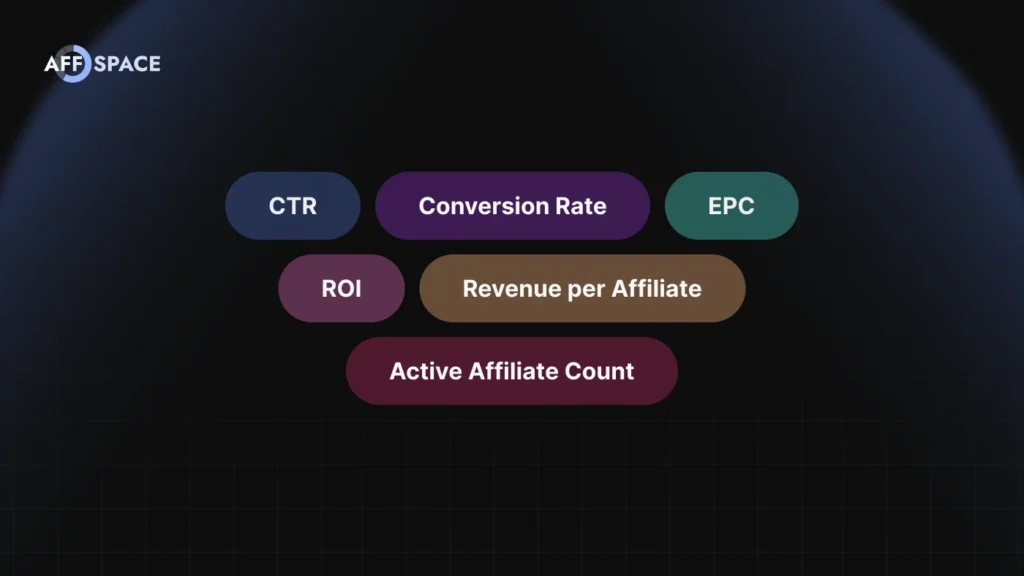
Affiliate tracking generates data, but that data only becomes valuable when transformed into actionable affiliate marketing metrics. These metrics guide strategic decisions and performance optimization.
Click-Through Rate (CTR): Measuring Initial Interest
CTR reveals how effectively affiliates drive traffic to your offers. It’s calculated as:
CTR = (Clicks ÷ Impressions) × 100
For affiliates, higher CTR indicates compelling content and strong calls-to-action. For merchants, tracking CTR by affiliate helps identify promotional strategies that resonate with audiences.
If an affiliate generates 10,000 impressions but only 50 clicks (0.5% CTR), their promotional approach needs improvement. Another affiliate with 1,000 impressions and 50 clicks (5% CTR) has found a winning formula worth replicating.
Conversion Rate: From Clicks to Customers
Conversion rate measures how many clicks result in desired actions (sales, sign-ups, downloads):
Conversion Rate = (Conversions ÷ Clicks) × 100
This affiliate marketing metric is critical because it reveals offer quality and audience match. Low conversion rates despite high traffic might indicate:
- Poor traffic quality: Affiliate attracts unqualified visitors
- Weak offer: Product doesn’t appeal to the audience
- Technical issues: Broken checkout process or confusing landing page
- Price problems: Offer is overpriced for the market
Programs like AFFspace track conversion rates across their 35+ offers, identifying which products perform best with different affiliate strategies and audiences.
Earnings Per Click (EPC): The Ultimate Performance Metric
EPC tells you how much revenue each click generates on average:
EPC = Total Earnings ÷ Total Clicks
This single affiliate marketing metric combines traffic volume, conversion rate, and commission value. An affiliate generating $2 EPC from 1,000 monthly clicks earns $2,000. Another with $0.50 EPC and 5,000 clicks also earns $2,500, but with more effort.
High EPC is a strong signal when choosing the best affiliate program to work with.
It indicates excellent traffic quality, strong promotional strategy, and good audience-offer alignment. Merchants should incentivize high-EPC affiliates with bonuses and exclusive offers.
Return on Investment (ROI): Profitability Analysis
For affiliates investing in paid advertising or other resources, affiliate marketing ROI determines profitability:
ROI = ((Revenue – Cost) ÷ Cost) × 100
Suppose an affiliate spends $1,000 on paid ads generating $3,000 in commissions. Their ROI is 200%—for every dollar invested, they earn two dollars profit.
Negative ROI means losing money. Zero ROI means breaking even. Positive ROI indicates profitability, with higher percentages representing better returns.
Tracking affiliate marketing ROI by campaign, traffic source, and promotional method helps affiliates optimize spending and focus on profitable channels.
Revenue Per Affiliate: Program Health Indicator
For merchants managing affiliate programs, revenue per affiliate reveals program health:
Revenue Per Affiliate = Total Program Revenue ÷ Number of Active Affiliates
Increasing revenue per affiliate suggests improving affiliate quality, better support resources, or more attractive offers. Decreasing numbers might indicate growing inactive affiliates or declining engagement.
AFFspace’s focus on personal success managers aims to increase revenue per affiliate by helping partners optimize their campaigns and maximize conversions.
The Power of Affiliate Conversion Tracking
While affiliate tracking captures all interactions, affiliate conversion tracking specifically focuses on the moment prospects become customers—the most critical event in performance marketing.
Why Conversion Tracking Changes Everything
Without conversion tracking, you’re measuring activity, not results. An affiliate might generate thousands of clicks (high activity) but zero sales (no results). Conversion tracking distinguishes busy work from productive work.
Quality affiliate conversion tracking reveals:
Which offers convert best: Some products naturally appeal to broader audiences or solve more pressing problems. Identifying high-converting offers helps affiliates focus promotion efforts strategically.
Which traffic sources convert: Clicks from organic search might convert at 3%, while social media traffic converts at 0.8%. This insight changes traffic acquisition strategy entirely.
Which promotional strategies work: Product reviews might convert at 5% while banner ads convert at 0.5%. Affiliates should shift resources toward high-converting content types.
When conversions happen: If most conversions occur within 24 hours of first click, the sales cycle is short. If conversions take weeks, nurturing becomes critical.
Implementing Effective Conversion Tracking
Proper conversion tracking requires technical setup and ongoing maintenance:
Pixel Placement: Conversion pixels must fire reliably on confirmation pages. Test thoroughly across different devices, browsers, and purchase flows.
Transaction Data Capture: Beyond simple conversion counts, capture order values, product types, and customer information. This data enables sophisticated analysis.
Duplicate Prevention: Ensure the system doesn’t double-count conversions from page refreshes or customer navigation behavior.
Testing and Validation: Regularly test conversion tracking by completing test purchases and verifying proper attribution and commission calculation.
Reliable affiliate conversion tracking builds trust between merchants and affiliates. When affiliates confidence they’ll receive credit for every valid conversion, they invest more energy promoting offers.
Leveraging Affiliate Marketing Data Analysis
Raw tracking data is meaningless without analysis. Affiliate marketing data analysis transforms numbers into insights that drive growth.
Identifying Top Performers
The Pareto Principle applies to affiliate marketing: typically, 20% of affiliates generate 80% of revenue. Affiliate marketing data analysis quickly identifies this vital 20%.
Once identified, merchants should:
- Increase commissions for top performers to maintain loyalty
- Offer exclusive promotions unavailable to other affiliates
- Provide priority support through dedicated managers
- Study their strategies to understand what works
- Recruit similar affiliates with comparable audiences and approaches
AFFspace’s structure with personal success managers exemplifies this approach—providing dedicated support helps top performers scale further.
Discovering Hidden Opportunities
Data analysis reveals opportunities invisible to casual observation:
Unexpected Traffic Sources: An affiliate might accidentally discover that Pinterest drives exceptional conversions for your product. This insight could launch an entire Pinterest-focused recruitment campaign.
Geographic Patterns: Certain regions might convert significantly better than others. AFFspace’s global reach across USA, UK, Canada, Australia, and tier-2 markets becomes more valuable when data reveals which regions perform best for specific offers.
Seasonal Trends: Tracking data across months and years reveals seasonal patterns. Some products sell better during holidays, back-to-school periods, or tax season. Understanding these patterns helps affiliates time promotional pushes strategically.
Device Preferences: Mobile vs. desktop performance varies by product and audience. If mobile traffic converts poorly, perhaps the merchant’s mobile checkout needs optimization.
Optimizing Commission Structures
Affiliate tracking data informs commission strategy:
Performance Tiers: Offer increasing commission rates as affiliates hit revenue thresholds. This incentivizes growth and rewards top performers.
Product-Specific Rates: If certain products convert exceptionally well, you might reduce commissions slightly. For struggling products, increase commissions to motivate promotion.
Bonus Structures: Data revealing conversion rate patterns enables intelligent bonus programs. For example, bonus payments for maintaining above-average conversion rates encourages quality traffic.
AFFspace’s dual structure—RevShare (45% first sale, 25% rebills) and CPA ($3-$50 per conversion)—allows affiliates to choose based on their traffic quality and promotional strategy.
The Role of Affiliate Marketing KPIs in Program Management
While metrics measure individual data points, affiliate marketing KPIs (Key Performance Indicators) are strategic measures aligned with business objectives.
Defining Meaningful KPIs
Not every metric deserves KPI status. Effective affiliate marketing KPIs share three characteristics:
Actionable: Changes in the KPI should trigger specific actions. If conversion rate drops, investigate traffic quality or offer issues.
Measurable: KPIs must be quantifiable and trackable over time. Vague goals like “better affiliate quality” aren’t KPIs; “average revenue per affiliate” is.
Aligned with Goals: KPIs should connect to business objectives. If your goal is profitability, track ROI and profit per affiliate. If it’s growth, track new affiliate recruitment and revenue growth rates.
Essential Affiliate Program KPIs
Active Affiliate Count: How many affiliates generated at least one click/conversion this month? Growing active affiliates indicates healthy program expansion.
Average Revenue Per Active Affiliate: Total revenue divided by active affiliates. Increasing this KPI suggests improving affiliate quality or better support.
Program-Wide EPC: Total commissions paid divided by total clicks generated. Rising EPC indicates improving offer quality, better affiliate training, or more targeted recruitment.
New Affiliate Conversion Rate: Percentage of recruited affiliates who generate their first sale within 90 days. Low rates suggest poor onboarding or unrealistic expectations.
Top Performer Retention: Percentage of top 20% affiliates active in consecutive periods. High turnover among top performers threatens program stability.
Average Order Value by Affiliate: Reveals which affiliates attract high-value customers vs. bargain hunters. Both are valuable, but understanding the difference informs strategy.
Using KPIs for Strategic Decisions
Regular KPI review sessions transform data into action:
Monthly Reviews: Track KPI trends and identify significant changes requiring investigation. Did average EPC drop 15%? Investigate whether offer changes, seasonal factors, or traffic quality shifts caused the decline.
Quarterly Planning: Use KPI trends to set next quarter’s objectives. If new affiliate conversion rates are low, prioritize improved onboarding. If top performer retention drops, investigate satisfaction issues.
Annual Strategy: Year-over-year KPI analysis reveals long-term patterns guiding major strategic decisions—program expansion, commission restructuring, niche focus changes, or platform upgrades.
Programs like AFFspace with 35+ offers and 200+ partners need robust KPI tracking to maintain strategic focus and identify optimization opportunities across diverse products and affiliates.
Building a Data-Driven Affiliate Marketing Culture
The most successful affiliate programs don’t just track data—they build cultures where data informs every decision.
Transparency and Trust
Open access to affiliate tracking data builds trust. When affiliates can view real-time statistics, they:
- Trust attribution accuracy: No wondering if they received credit for sales
- Optimize continuously: Immediate feedback enables rapid testing and improvement
- Feel empowered: Data access demonstrates merchant respect and partnership mentality
- Resolve disputes quickly: Most disagreements stem from lack of visibility
Merchants benefit equally from transparency. When affiliates see their performance clearly, they self-select appropriate promotion strategies and realistic effort levels.
Education and Support
Tracking data is only valuable if stakeholders understand it. Investment in education pays dividends:
For Affiliates:
- Training on reading performance dashboards
- Guidance on which affiliate marketing metrics matter most
- Strategies for improving conversion rates and EPC
- Case studies showing how successful affiliates use data
For Affiliate Managers:
- Training on identifying trends and anomalies
- Understanding statistical significance in A/B tests
- Fraud detection and invalid traffic recognition
- Effective communication of insights to affiliates
AFFspace’s approach of providing personal success managers embodies this educational support, helping affiliates understand their data and optimize performance.
Continuous Improvement Mindset
Data-driven cultures embrace experimentation:
Test Everything: Encourage affiliates to test promotional approaches, content types, traffic sources, and messaging. Track results rigorously to identify winners.
Share Insights: Create channels for top performers to share successful strategies. What works for one affiliate might work for others with similar audiences.
Iterate Quickly: When data reveals opportunities or problems, act fast. Waiting months to address obvious issues wastes potential revenue.
Celebrate Wins: When data-driven decisions produce results, celebrate publicly. This reinforces the value of analytics and encourages continued engagement.
Overcoming Affiliate Tracking Challenges
Despite its importance, affiliate tracking faces several challenges in 2025 and beyond.
Privacy Regulations and Cookie Restrictions
GDPR in Europe and similar regulations worldwide restrict tracking capabilities. Browser manufacturers increasingly block third-party cookies by default. These changes impact affiliate tracking:
Shorter Attribution Windows: Without persistent cookies, some conversions go uncredited. This particularly affects products with longer consideration periods.
Reduced Data Granularity: Privacy restrictions limit detailed behavioral tracking, making it harder to understand customer journeys.
Compliance Complexity: Merchants must ensure tracking systems comply with various regional regulations, adding legal and technical complexity.
Solutions:
- Implement server-side tracking that doesn’t rely on browser cookies
- Use first-party cookies which face fewer restrictions
- Develop alternative attribution methods like unique coupon codes
- Focus on transparency and user consent to maintain trust
Programs using professional platforms like Tune stay current with privacy requirements while maintaining accurate affiliate tracking.
Fraud and Invalid Traffic
As affiliate marketing grows, so does fraud. Common schemes include:
Cookie Stuffing: Malicious affiliates force cookies onto users’ browsers without genuine clicks, stealing credit from legitimate affiliates.
Click Fraud: Bots or click farms generate fake clicks to inflate affiliate statistics and steal marketing budget.
Incentivized Traffic: Affiliates pay users to click links or complete actions, generating fake conversions that won’t result in valuable customers.
Brand Bidding: Affiliates bid on merchant brand terms in paid search, capturing customers already seeking the merchant directly.
Solutions:
- Implement fraud detection algorithms monitoring for suspicious patterns
- Regularly audit top affiliates’ traffic sources and methods
- Establish clear program terms prohibiting fraudulent practices
- Use platforms with built-in fraud prevention capabilities
- Investigate anomalies like sudden traffic spikes or unusually high conversion rates
Protecting affiliate tracking integrity maintains program profitability and ensures honest affiliates receive appropriate credit.
Technical Implementation Complexity
Proper affiliate tracking requires technical expertise many merchants lack:
- Correct pixel placement across various checkout flows
- Handling multiple currencies and payment methods
- Tracking mobile app conversions separately from web
- Managing tracking across multiple domains or subdomains
- Integrating tracking platform with existing technology stack
This complexity explains why programs like AFFspace use specialized platforms like Tune rather than building custom solutions. Professional tracking platforms handle technical challenges, allowing merchants to focus on program growth.
Data Accuracy and Attribution Debates
No tracking system is perfect. Common accuracy challenges include:
Browser Clearing: Users clearing cookies lose attribution chains Multiple Devices: Customers researching on mobile but purchasing on desktop Assisted Conversions: Multiple affiliates influencing a single purchase Return/Refund Handling: Managing commission reversals for cancelled orders
These challenges require clear program policies and reasonable attribution models balancing accuracy, complexity, and fairness.
The Future of Affiliate Tracking
Affiliate tracking continues evolving to address current challenges and leverage new technologies.
AI and Machine Learning Integration
Artificial intelligence is transforming affiliate tracking:
Fraud Detection: ML algorithms identify fraudulent patterns more accurately than rule-based systems, protecting program integrity.
Attribution Modeling: AI can analyze complex multi-touch journeys and assign appropriate credit across touchpoints more fairly than simple last-click models.
Predictive Analytics: Machine learning predicts which affiliates will become top performers, helping merchants focus support strategically.
Optimization Recommendations: AI systems can suggest which offers individual affiliates should promote based on their traffic characteristics and historical performance.
Programs implementing AI-enhanced affiliate tracking will gain significant competitive advantages in performance and efficiency.
Blockchain and Transparent Tracking
Blockchain technology promises improved transparency and trust:
- Immutable Records: Blockchain-based tracking creates tamper-proof records of clicks, conversions, and commissions
- Smart Contracts: Automated commission payments based on verified conversions, eliminating payment delays and disputes
- Transparency: All parties can verify transaction history without trusting intermediaries
While still emerging, blockchain-based affiliate tracking could solve many trust and transparency challenges.
Cross-Platform and Omnichannel Tracking
Modern customers interact across multiple channels. Future affiliate tracking will:
- Track journeys from social media to email to website to in-store purchase
- Attribute credit appropriately across digital and physical touchpoints
- Provide unified views of customer behavior regardless of interaction channel
- Enable affiliates promoting across multiple platforms to understand total impact
This comprehensive tracking reveals the complete value affiliates provide, potentially increasing compensation for their full contribution.
Implementing Effective Affiliate Tracking: Best Practices
Whether you’re launching a new affiliate program or optimizing an existing one, these best practices ensure effective affiliate tracking.
Choose the Right Tracking Platform
Your tracking platform is the foundation. Consider:
Reliability: The platform must track accurately and consistently. Missing conversions damages affiliate relationships and costs money.
Scalability: Choose platforms handling growth. What works for 10 affiliates might fail at 1,000.
Features: Ensure the platform offers necessary capabilities—multiple attribution models, fraud detection, real-time reporting, mobile tracking.
Integration: The platform should integrate with your payment processors, CRM, and other business systems.
Support: Quality vendor support resolves issues quickly and minimizes revenue loss.
Programs like AFFspace use Tune specifically because it meets these criteria—it’s reliable, scalable, and feature-rich.
Establish Clear Tracking Policies
Document your tracking and attribution rules:
- Cookie duration (AFFspace offers 120 days)
- Attribution model (last-click, first-click, multi-touch)
- How returns and refunds affect commissions
- Conversion validation periods before payment
- Prohibited practices (cookie stuffing, fraud, brand bidding)
Clear policies prevent disputes and set appropriate expectations.
Provide Excellent Dashboard Access
Affiliates need real-time access to their performance data:
- Clicks and impressions
- Conversion counts and rates
- Commission earnings (pending and paid)
- Top-performing links and campaigns
- Historical trends and patterns
Transparent dashboard access builds trust and enables affiliate optimization.
Regular Data Audits
Periodically audit your affiliate tracking:
- Verify conversion pixels fire correctly across all purchase flows
- Test tracking with different browsers, devices, and scenarios
- Review for suspicious patterns indicating fraud
- Confirm commission calculations match documented rates
- Check that payment amounts align with tracking data
Regular audits catch problems before they become expensive mistakes.
Invest in Analytics Capabilities
Raw tracking data needs analysis to become valuable:
- Hire or train team members in affiliate marketing data analysis
- Use visualization tools creating clear reports and dashboards
- Establish regular reporting rhythms (weekly, monthly, quarterly)
- Create benchmarks and KPIs aligned with business objectives
- Share insights with affiliates to help them optimize
The most successful programs don’t just collect data—they extract insights and take action.
Conclusion: Affiliate Tracking as Competitive Advantage
In performance marketing, affiliate tracking isn’t optional—it’s fundamental. The difference between programs generating millions in profitable revenue and those struggling to break even often comes down to tracking quality and data utilization.
Effective affiliate tracking provides:
- Clarity: Understanding exactly what drives results
- Optimization: Identifying and scaling what works
- Trust: Building confidence between merchants and affiliates
- Growth: Making data-driven expansion decisions
- Profitability: Eliminating waste and focusing resources on high-ROI activities
Programs like AFFspace demonstrate this understanding through their investment in professional tracking platforms like Tune, generous 120-day cookie duration, transparent reporting, and personal success manager support. These elements combine to create a tracking environment where both merchants and affiliates can optimize performance continuously.
Whether you’re running an affiliate program or promoting products as an affiliate, prioritizing affiliate tracking transforms your approach from guesswork to science. The data generated through comprehensive tracking becomes your roadmap to sustainable growth and long-term success.
Start with reliable tracking infrastructure, focus on meaningful affiliate marketing metrics and affiliate marketing KPIs, embrace affiliate marketing data analysis, and build a culture where data informs every decision. This foundation enables everything else—better affiliate relationships, higher conversion rates, improved affiliate marketing ROI, and scalable growth.
The most successful affiliate marketers aren’t necessarily the most creative or the hardest working. They’re the ones who track everything, analyze rigorously, and let data guide their decisions. With proper affiliate tracking and affiliate conversion tracking in place, you join this elite group—equipped to optimize continuously and grow profitably.
The future belongs to data-driven affiliate programs. Make affiliate tracking your competitive advantage, and watch your performance marketing efforts reach new heights.
