

YouTube Affiliate Marketing: Complete Guide to Making Money in 2026

YouTube has one unfair advantage most platforms don’t: content doesn’t die. A video you upload today can still bring in commissions two years from now. That’s exactly why YouTube affiliate marketing continues to outperform faster-moving platforms like TikTok or Instagram.
How YouTube Affiliate Marketing Works
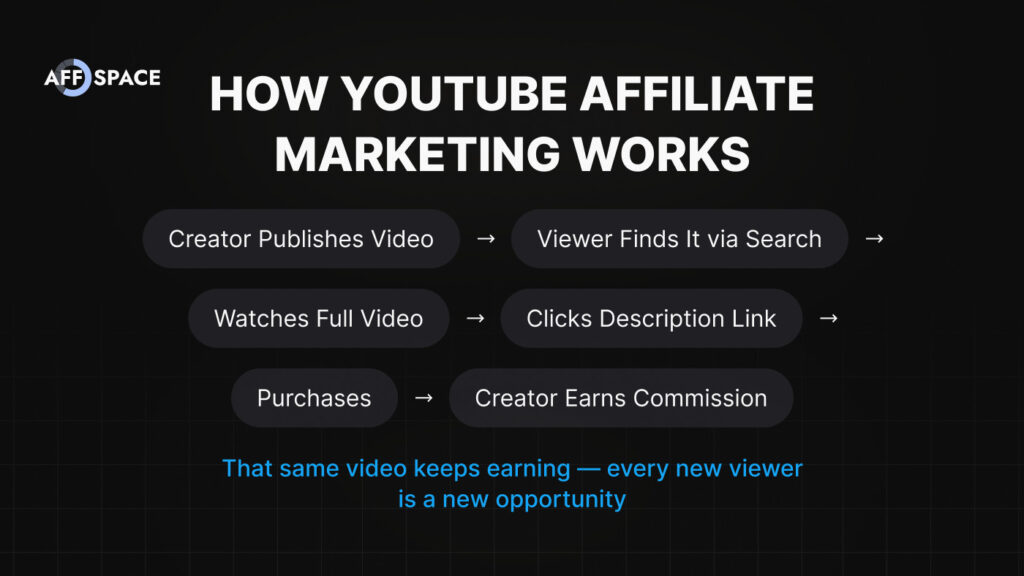
At its core, YouTube affiliate marketing relies on three key advantages unique to the platform: search-based discovery, strategic link placement, and long-term content visibility. If you need the full breakdown, here’s a quick refresher on how does affiliate marketing work.
- First, discovery is search-driven. Your videos show up when someone actively looks for a solution, not randomly in a feed. That means the traffic you get is already high-intent. Someone searching “best espresso machine under $200” isn’t browsing – they’re close to buying.
- Second, affiliate links on YouTube aren’t hidden. They’re built into how people already use the platform. After watching a video, most viewers instinctively open the description, especially for product links or recommendations.
- That matters because the intent is already there. On YouTube, people don’t click randomly. They watch first, decide, then act. So, search-based content (like reviews or tutorials) typically converts better because viewers are comparing options before buying.
- This is also where YouTube Shorts affiliate marketing plays a different role. Shorts don’t support clickable description links the same way long-form videos do, so they work best as top-of-funnel content, grabbing attention and sending viewers to a full video where your affiliate link actually lives.
- You can see this in how people behave on the platform: YouTube search traffic is highly intent-driven, not passive. When someone finds your video through search, they’re usually already looking for answers and evaluating options. After watching a full explanation, they’re far more likely to follow through and click a link than on short-form platforms, where decisions happen in seconds.
- Finally, there’s the compounding effect. A well-ranked video can bring in traffic for months or even years. Unlike short-form platforms where content fades in hours, YouTube videos keep stacking views, clicks, and commissions over time.
The biggest advantage, though, is trust. Long-form video gives you time to explain, compare, and show real use. By the time someone clicks your link, they’ve already watched you break down the product, which is why conversions from YouTube are typically much higher than from short-form content.
Where Affiliate Links Live on YouTube
Your affiliate links YouTube setup isn’t complicated, but doing it right takes a bit of effort. Where your links appear often decides whether viewers click or scroll past.
- The first link should always sit in the description above the fold – that’s your highest click-through spot.
- Pinned comments work as a backup for mobile viewers.
- End screen cards can guide viewers toward related videos with links in descriptions.
- Your channel bio can hold evergreen links for long-term visibility
Paying attention to these placements ensures your links get seen at the exact moment viewers are most ready to click, turning more of your traffic into real commissions.
How to Do Affiliate Marketing on YouTube: Step-by-Step
YouTube isn’t just a social feed – it’s a search engine where people come to learn, compare, and make buying decisions.

Step 1: Pick a Niche and Join the Right Programs
This is where most people go wrong with YouTube affiliate marketing for beginners – they pick random products instead of focusing on what works on YouTube.
Products that require explanation tend to convert best. Think tech, finance tools, software, or anything where people actively compare options before buying.
Instead of going broad, narrow down your focus and align it with strong affiliate programs for YouTubers. If you’re unsure how to do that, check this guide on finding your perfect affiliate marketing niche and choosing the best affiliate program to join.
Also, pay attention to cookie duration. Since YouTube buyers take longer to decide, a 30-90 day cookie can make a huge difference in your earnings.
Step 2: Create Videos Built Around Buyer Intent
Not all views are equal. If you’re serious about affiliate marketing on YouTube, you need videos that attract people ready to buy, not just browse.
- Comparison videos: Side-by-side breakdowns of similar products help viewers make choices.
- Honest reviews: Sharing your own experience after using a product builds credibility.
- Problem-solution tutorials: Showing how a product solves a specific problem encourages trust and clicks.
The goal is to match search intent: the keyword your video ranks for should reflect what someone types when they are close to making a purchase.
Step 3: Place Your Affiliate Links Correctly
Where and how you place links on YouTube directly impacts your earnings. Your primary affiliate link should be at the very top of the description – above the fold – so viewers don’t have to scroll to find it. Include a one-line explanation for each link to make it clear why someone should click. Always use tracking links instead of raw URLs to monitor performance. Also, make your disclosure clear at the top of the description and don’t bury it at the bottom. If you’re new to this, what is an affiliate link and how to promote it explains the process in detail.
Step 4: Track What’s Converting
Views don’t make money, but clicks and purchases do. Use UTM parameters alongside your affiliate dashboard to see which videos actually generate revenue. That’s how you identify what to scale.
This is where most beginners fail at how to do affiliate marketing on YouTube: they keep posting without knowing what works. If tracking still feels unclear, here’s a deeper breakdown of why affiliate tracking is essential.
Best Affiliate Programs for YouTubers
Choosing the right YouTube affiliate programs can completely change your income potential. Below is a quick comparison of some of the most effective options.
| Program | Commission | Best For | Cookie Duration |
| Amazon Associates | 1-10% | Physical products, reviews | 24 hours |
| ClickBank | 50-75% | Digital products | 60 days |
| AFFspace | 45% on the initial sale and 25% for recurring sales | Make money online/marketing niche | 120 days |
| SaaS Programs | Recurring (10-40%) | Software, tools, subscriptions | 30-90 days |
- Amazon Associates: The Amazon Associates program fits YouTube particularly well because viewers often arrive with a clear product in mind and want to see it in action before buying. Instead of browsing, they watch a full demo, then go straight to the description to find the exact model linked.
What makes it work is how naturally the platform supports that flow: watch – evaluate – click. Even with lower commission rates, creators can generate consistent earnings (for more details, see our Amazon affiliate program complete guide), because these videos keep ranking in search and bringing in ready-to-buy traffic long after they’re published.
- ClickBank: Digital products from ClickBank often pay much higher commissions than physical products, which makes them especially attractive for YouTube creators (for more details, see our ClickBank affiliate program review). Since these offers usually need more explanation before someone buys, they naturally fit long-form content like tutorials, breakdowns, or “how it works” videos – exactly the kind of content YouTube rewards.
- AFFspace: It is an excellent choice for creators covering online business, digital marketing, or building income streams. It’s built specifically for YouTube creators who want to earn meaningful commissions from their very first video, even without a large audience. With competitive payouts and a variety of relevant offers, AFFspace makes it easy to turn tutorials, reviews, or how-to videos into consistent affiliate revenue while giving your viewers products and services that truly match their interests.
- SaaS/recurring programs: SaaS and other recurring-commission programs work really well on YouTube because most people don’t make a decision instantly. Long-form videos let you explain the product, show how it works, and answer questions before viewers even consider signing up. Once someone subscribes, you keep earning every month without creating new content. Over time, a single video can turn into a steady source of passive income, thanks to the trust you’ve built with your audience.
When people search for the best affiliate programs for YouTubers, they usually focus on the commission rate. In reality, the combination of product price, trust, and audience fit matters far more.
Realistic Earnings from YouTube Affiliate Marketing
There’s a misconception that you need millions of views to succeed with how to make money on YouTube with affiliate marketing. You don’t.
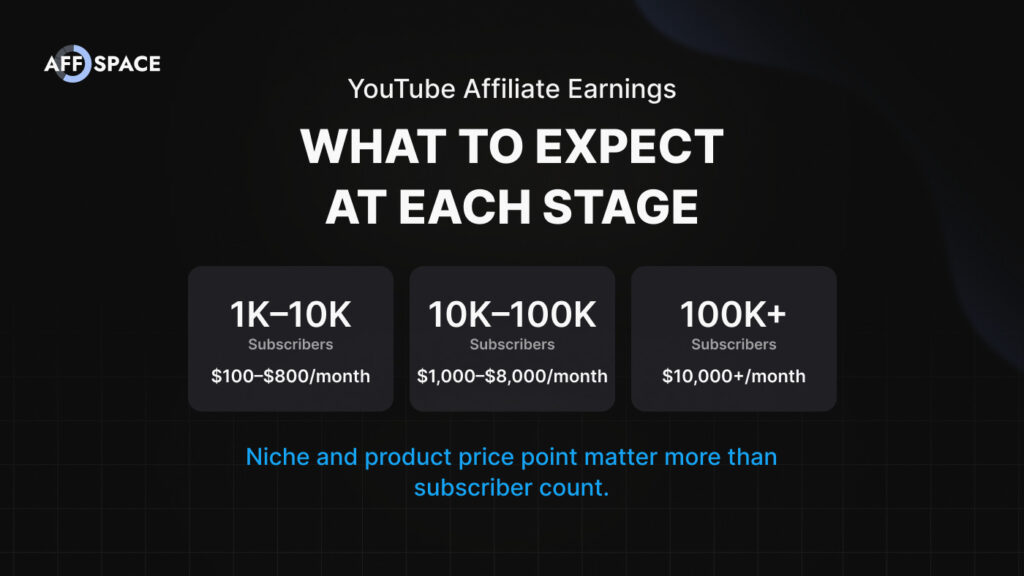
Here’s what typical earnings look like:
- 1K-10K subscribers: On YouTube, even small channels can earn $100-$800 per month by targeting the right niche and creating videos that match search intent. Videos like tutorials, honest reviews, or problem-solving demos work best because viewers often come from a search looking to decide on a purchase. A single well-optimized video can keep generating clicks for months, thanks to YouTube’s evergreen traffic (get info on how to start affiliate marketing with no money in our blog).
- 10K-100K subscribers: Channels in this range often make $1,000-$8,000 per month by combining reach with YouTube’s long-form format. Videos that explain products in detail, compare products, or demonstrate real-world use build trust and reputation. Publishing consistently allows creators to rank for multiple searches, turning each video into a mini-asset for recurring income.
- 100K+ subscribers: Larger YouTube channels can earn $10K+ per month in high-ticket or recurring programs. It means that even a single in-depth video can drive significant revenue, as viewers are more likely to trust the creator and follow through with purchases. Recurring or SaaS programs work particularly well because YouTube’s long-form content and search visibility continue to attract new subscribers over time.
The real driver isn’t subscriber count. It’s the product you promote and how well your content matches buying intent. If you want to scale faster, high-ticket offers can multiply results quickly. This is explained well in the high-ticket affiliate marketing complete guide.
YouTube Affiliate Disclosure: What You’re Required to Do
On YouTube, being transparent about affiliate links isn’t just good practice. It’s part of the platform’s rules. You need to clearly let viewers know when your video includes affiliate links, both verbally during the video and in writing at the very top of your description. YouTube also provides a “paid promotion” checkbox in the upload settings, which should be used whenever your content contains affiliate links or sponsored products.
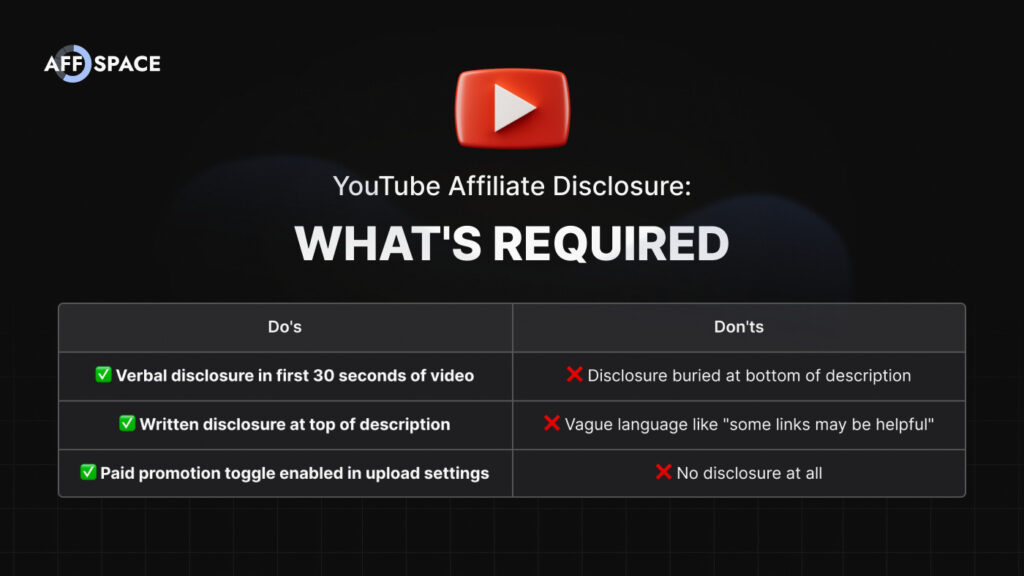
Not every mention counts, though. Only links or promotions that could earn you a commission require disclosure. Casually talking about a product without linking doesn’t fall under this rule. Following these steps keeps you compliant and builds trust with your audience, while a broader guide to affiliate compliance will be covered in a future article. For full details, check out YouTube’s affiliate disclosure requirements.
Conclusion
Bring it back to the evergreen angle – a well-optimized YouTube video keeps earning long after you’ve moved on. That compounding effect is what makes YouTube one of the highest-ceiling platforms for affiliate marketers.If your channel covers online business, digital marketing, or building income online, joining AFFspace gives you a relevant program to promote from your very first video – no audience minimum required. By creating thoughtful, value-packed content today, you can enjoy a steady stream of affiliate revenue well into the future.
